
Picking a paint color gets most of the attention. The finish usually gets a quick decision at the counter. That can be a mistake.
Paint finish, also called sheen, affects how the color looks, how easily the wall cleans, and how much surface damage you can see. In a Florida home, it also matters in bathrooms, kitchens, laundry rooms, and other spaces that deal with moisture.
There is no single best finish for the whole house. The right choice depends on the room, the amount of traffic, the condition of the wall, and how much natural light hits it.
What paint sheen actually changes
Sheen describes how much light the dried paint reflects. Flat and matte finishes reflect very little. Eggshell and satin have a soft glow. Semi-gloss and gloss reflect the most light.
As sheen increases, paint is usually easier to wipe clean. The tradeoff is that more shine can call attention to dents, patches, uneven texture, and roller marks. That matters in Tampa Bay homes with strong daylight, large windows, or walls that have been repaired over the years.
Finish names also vary by manufacturer. One brand's eggshell can look close to another brand's satin. Compare the actual product samples instead of relying only on the name printed on the can.
The quick room-by-room guide
- Living rooms and dining rooms: Eggshell or satin
- Bedrooms: Matte, eggshell, or satin
- Hallways, entryways, and kids' rooms: Satin
- Kitchens and laundry rooms: Satin or semi-gloss
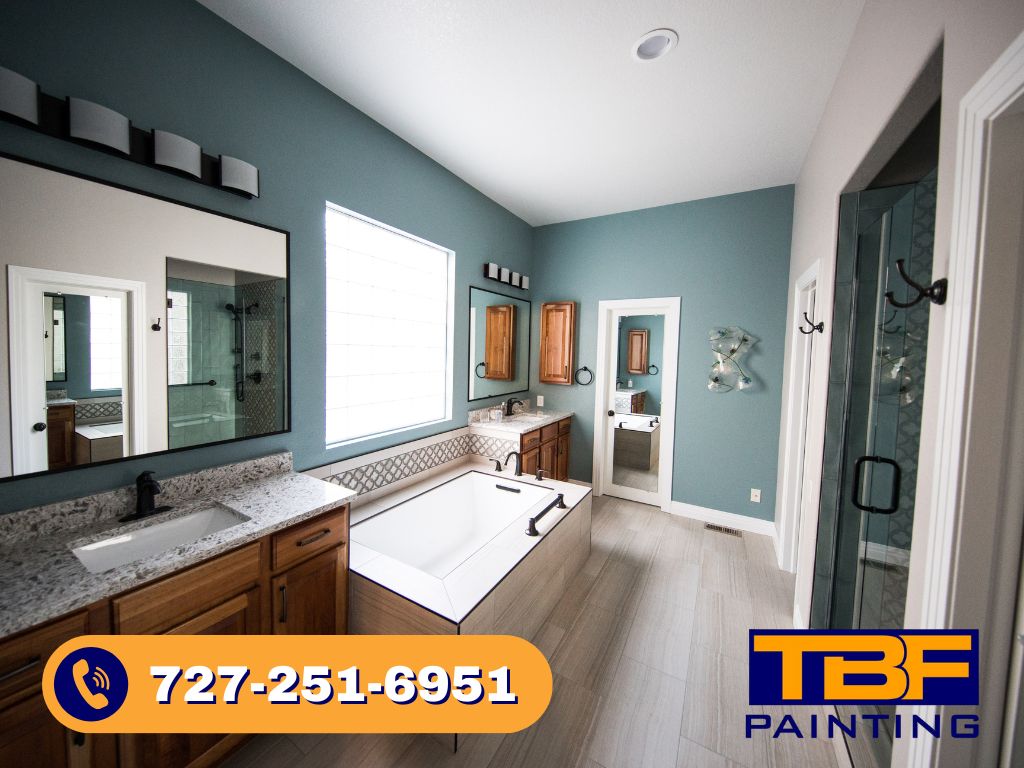
- Bathrooms: Satin, semi-gloss, or a bathroom-rated matte product
- Ceilings: Flat
- Trim, doors, and baseboards: Semi-gloss
- Cabinets: A cabinet-grade satin or semi-gloss coating
That is the short answer. The condition and use of each room can change it.
Living rooms and dining rooms: eggshell or satin
Eggshell is a common choice for living and dining areas because it adds a small amount of washability without putting a spotlight on every wall flaw. It works well in spaces that get regular use but do not face constant splashes or fingerprints.
Satin makes sense when the room is busier, children or pets are in the home, or the walls need frequent cleaning. It has more shine than eggshell, so wall prep needs to be cleaner. Patches and rough areas that disappear under a flat finish may stand out under satin.
Bedrooms: matte, eggshell, or satin
Adult bedrooms are usually low-traffic spaces. Matte or eggshell gives the walls a calm look and helps hide small imperfections. In a child's room, satin is often the better choice because it handles fingerprints and regular wipe-downs more easily.
If the bedroom gets strong morning or afternoon sun, test the finish as well as the color. A sample that looks soft at night may show much more reflection in direct Florida daylight.
Hallways and entryways: satin
Hallways collect handprints, scuffs, bags, shoes, and furniture bumps. Satin gives these areas a washable surface without the sharper shine of semi-gloss. It is also a good choice for stairwells and family rooms that see steady traffic.
Before painting, repair nail pops, dents, and old patches. Long hallways often have light running across the wall, which makes surface defects easier to see.
Kitchens and laundry rooms: satin or semi-gloss
Kitchen walls need to handle splashes, grease, and cleaning. Satin works well across most walls. Semi-gloss can make sense near hard-working areas when easier cleaning matters more than hiding imperfections.
Laundry rooms also deal with moisture, heat, and tight spaces. Satin is a solid default. Use semi-gloss when the walls take frequent contact or need regular scrubbing.
Paint will not fix an active leak, condensation problem, or poor ventilation. Those issues need to be corrected before the room is repainted.
Bathrooms: choose the product and the sheen
For most bathrooms, satin or semi-gloss is a safe choice because the surface is easier to clean and better suited to moisture than a basic flat wall paint. Powder rooms without a shower can often use eggshell or satin.
A full bathroom needs more thought. The room's ventilation, wall condition, and paint formula all matter. Some bathroom-rated coatings are made to resist moisture and mildew even in a matte finish. That means you do not have to accept shiny walls just because the room has a shower.
Do not paint over mildew or damp drywall. The surface needs to be clean, dry, and repaired first. If the exhaust fan cannot clear steam, new paint alone will not solve the problem.
Ceilings: flat in most rooms
Flat paint keeps ceiling glare down and hides minor texture differences better than a higher sheen. That is useful on large ceilings where daylight can reveal every lap mark.
Bathroom ceilings are the exception to consider carefully. A bathroom-rated flat or matte coating can keep the low-sheen look, while satin may be the better choice in a room with heavy moisture or weak ventilation.
Trim, doors, and baseboards: semi-gloss
Trim and doors take more contact than walls. Semi-gloss gives them a harder-looking, easy-to-clean finish and creates a clear contrast against eggshell or satin walls.
Higher sheen also reveals brush marks, dents, and rough caulk lines. Good sanding, filling, and caulking matter before the finish coat goes on.
Cabinets: use a coating made for cabinets
Cabinets are not just small walls. They are touched every day and need a coating that can cure to a harder finish. A cabinet-grade satin or semi-gloss product is a better fit than standard wall paint.
Preparation matters even more here. Grease, worn clear coat, and slick factory finishes can keep new paint from bonding. Cleaning, sanding, and using the correct primer are part of a cabinet finish that holds up.
Is eggshell or satin better for Florida homes?
Neither wins every room. Eggshell is better when you want lower shine and need to hide minor wall flaws. Satin is better when the surface needs more cleaning or faces steady traffic and moisture.
For many Florida homes, a practical plan is eggshell in the main living areas, satin in hallways and busy rooms, semi-gloss on trim, and a moisture-ready finish in bathrooms. The exact choice should still account for the wall condition and the product being used.
Test the finish before painting the whole room
A color sample helps, but it does not always show how the final sheen will react to the room. Ask for a sample in the finish you are considering. Check it in daylight and at night. Look from the side, not just straight on, to see how much texture and patchwork it reveals.
If you are getting ready for a project, use TBF's interior painting checklist to plan the rooms before the crew arrives.
Get the finish right before the first coat
A good finish choice should fit the way the room is used, not just the way a sample looks in the store. TBF Painting Contractor provides interior painting for homes, condos, apartments, and commercial spaces across Clearwater and the broader Tampa Bay service area.
Browse recent painting projects, then request a free estimate or call 727-251-6951. We can help you compare colors and finishes before the painting starts.